Saturday, April 27, 2013

Lingam yoni

My Son is an ancient monumental treasurer in Vietnam. However, some statues and exhibits were stolen or had collapsed during the war or over time. Arriving at My Son, tourists may lose themselves in the vast green forest, fresh air and tranquility. After going up and down the slopes, travelers will see an ancient tower hidden behind the gravel path and bushy trees.

My Son is a cluster of Hindu temples and is surrounded by mountain ranges. In the past, My Son was a burial place for Cham royalty and a site of religious ceremonies for the kings of the ruling Champa dynasties. My Son is regarded as one of the oldest Hindu temple complexes in Southeast Asia and is a unique place in Vietnam.

Observing the My Son temples, with their sandstone exhibits and statues, tourists will see spiritual culture more often identified with India. Scientists said that the first temple was built in My Son in the sixth century. Unfortunately, a major fire reduced it to ashes. Some other temples were built to make My Son an original architectural complex. These temples are different from each other, and each has its own mysterious exterior.

Apart from the temple architecture, Hindu culture is also reflected through the relics found in My Son. They were made in the era of King Bhadravarman I, who ruled from 380 until 413 AD. A temple was built to worship Shiva in the form of lingam, which is interpreted as the God of Rebirth.

Until now, this religious culture has existed in old written records in Sanskrit. Lingam, yoni, Nadin and Apsara statues have been kept in the temples. Tourists will be amazed when seeing the red bricks used to build the temples. No one fully understands how the bricks were made, or what construction techniques were used by the Cham builders to set up these temples without any adhesives.

No matter how the temples were built, every cluster in My Son consists of the main temple of Kalan, which is surrounded by temples featuring lingam, yoni and Shiva statues. Researchers said that in front of the complex is the entrance gate-tower called Gopura, and the next is Mandapa, a vestibule for public rituals.

Next to the vestibule is an architectural work facing the north, often called the direction of Kubera - the God of Wealth. It has one or two halls containing offerings to worship the gods. The main entrance gates of all temples face the east to receive the sunlight completely. Every temple is shaped like a pyramid, which is the symbol of Lord Meru and where Hindu gods reside.

However, tourists will find some traces of Buddhism in the land of Hinduism. In the 10th century, Buddhism became the main religion of the Cham people. Sweating profusely after a tour around temples in My Son Sanctuary, tourists can enjoy a folk music program performed by Cham girls in traditional dress.

Friday, April 26, 2013

Seeing jesus

They saw the risen Savior. I asked for legions of holy angels to descend and surround them for protection. Within a few minutes, legions of these holy angels appeared to these broken baby parts. Oh, the incredible deep inner healing that took place! It was remarkable. It was stunningly beautiful to witness seeing Jesus take the pain and the hurt of all these dozens of hurting parts.

Mind you, these were babies, they even acted like little newborns –the hand movements and facial disposition revealed little newborns were present. Jesus healed these many parts and they all agreed to become one with the core’s heart. Supernaturally, her heart was put back together by Jesus and she experienced a long spiritual rest. Everyone just looked on with awe –seeing Jesus give this precious woman heavenly rest that she not previously experienced as her heart had been so deeply broken from the time she had been born.

Not only did this woman experience freedom, physical and inner healing her precious 29 year old daughter also experienced Jesus. Within a few minutes this dear lady was freed from many demons and experienced healing from dissociation. She testified of feeling many pieces of her heart being merged back together as I ministered to her. What a mighty God we serve! The rest, the healing, the deliverance was beautiful witness!

The most beloved of all Hindu gods, Ganesh and Krishna can bestow protection, greater self knowledge and worldly opportunity to those who pray to them. Through daily prayer, to and with these profound, ancient spiritual deities, loved by millions throughout the world, ones life can become imbued with greater understanding of and connection to oneself, neighbors and the cosmos. Packaged with a colorful mini book rich with tales of godly adventures, a hand-crafted pearl-white statue, fine-quality imported incense and simple guidebook to jump start your practice, this kit is a handy, portable altar and great gift item.

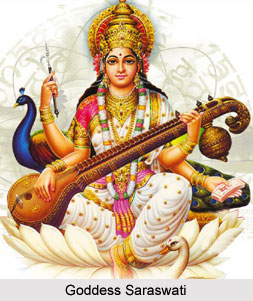
Hinduism in India is practiced widely as more than 80 % of total Indian population is Identifies as Hindu population. Hinduism in India involves worshipping idols of the hindu gods like; saraswati mata, lord shiva, Hanuman, lord Krishna and performing rituals that are age old. Hindus follow very old traditional customs of srauta, vaishnavism, and shaivism and have firm belief in dharma and karma. Societal norms and customs form the base of every Hindu society in India and they are very particular about their customs. Usually most of the Hindus are against animal killing and they consider it a profane act and that is why most of them are vegetarians. In fact, cow is considered a holy animal and is therefore worshiped.

Thursday, April 25, 2013

Images of Hindu Gods


Hindu Gods


Thaipusam festival devotees

The Batu Caves is one of the most prominent Hindu shrines outside India. During the Thaipusam Festival, the caves see a million devotees plus thousands of observers joining the processions. The gathering is bigger than India’s itself and notably one of the world’s largest. And speaking of largest…

Unveiled in 2006, the 42.7 meter high statue is the largest of this Hindu god’s–and the second largest of a Hindu deity–in the world. Fifteen Indian sculptors collaborated to create the giant golden statue made of concrete, steel bars and gold paint. It costs RM 2.5 million and took three years to make.

A visit won’t be complete without climbing the 272 staircase to the temple cave. During the Thaipusam festival, devotees must climb these steps while carrying offerings to Lord Murugan. And not just any lightweight present–these offerings are milk containers that could be as heavy as a hundred kilo!

While ascending to the temple, you may meet some macaque monkeys. Travelers strongly advice to follow the sign on the temple and not feed them because they are not fuzzy sorts in zoos. Traveler Annie from the Philippines explains, “We enjoyed climbing the 272 steps and were welcomed by monkeys along the stairs just be careful they might grab your bag wouldn’t want to hold any kind of food which could catch their attention.”

Lord Ram is the seventh avatar of the god Vishnu in Hinduism and a king of Ayodhya in Hindu scriptures. Ram's life come from the Ramayana, born as the eldest son of Kausalya and Dasharatha, king of Ayodhya, Ram is referred to within Hinduism as Maryada Purushottama. Ram is the husband of Sita an brother of Lakshman.

Datuk Seri Najib Razak described Datuk Zulkifli Noordin today as a champion of Indian issues in Shah Alam where the Perkasa vice-president is contesting in Election 2013. The BN chairman’s defence of the controversial Barisan Nasional (BN) candidate comes even as MIC leader S. Vell Paari warned the ruling coalition recently that the Malay rights leader would cost BN Selangor in the May 5 polls.

“I’ve spoken to quite a number of Indians and they’re supporting him,” said the caretaker prime minister in a press conference at the Concorde Hotel here today. “He’s already championed some issues pertaining to the Indian community in Shah Alam, like a Tamil school and another temple in Shah Alam,” added the Selangor BN chairman.

Vell said last Wednesday that BN was risking the Indian vote by fielding Zulkifli, which he said would likely become the deciding vote in states like Selangor that Pakatan Rakyat (PR) had won in Election 2008. Zulkifli will be contesting against incumbent Shah Alam MP Khalid Samad in the Malay-majority state capital, who is seen as a progressive voice in PAS.

Vell, who is the son of former MIC chief Datuk Seri S. Samy Vellu, also noted that there are some 15,000 Indian voters in Shah Alam, 31,000 in Kota Raja, 21,000 in Kapar and 17,000 in Subang, many among whom he said were angered by Najib’s selection of Zulkifli, who had allegedly insulted the Hindu community. Najib, however, dismissed Zulkifli’s actions as “history”, noting that the former PAS man had apologised over his remarks.

Wednesday, April 24, 2013

Images of Hindu Gods


Ganesh chaturthi

This festival has taken monumental proportions with people willing to spend as much as needed only to be able to make claims to a higher and more expensive statue in public places. The dangerous thing with all this vying for superior status is that the environment is taking a beating at the hands of us humans.

When the statues are immersed in water, they take with them thousands of kilograms of Plaster of Paris, artificial colors and a lot of other chemical waste that pollutes the water bodies in irreparable ways. But on the positive side, people are coming out to stop the damage being done, and to ensure that the celebrations add to the joys of our lives and not to the sorrows.

Ending on a sweet note, one of the best aspects of Ganesh Chaturthi are the mouth-watering sweets that are made. Dumplings made of rice flour also known as “modak” in Hindi are unique to this occasion. Ganesh is said to be partial to them. So are we! In fact, these sweets are mostly not made at other times; that perhaps is the reason they are awaited with as much enthusiasm as the festival itself.

The Batu Caves is a massive limestone hill around 13 kilometers north of Kuala Lumpur. Its interiors are home to a Hindu shrine lined with different deities. The shrine itself is located deep inside the high caverns which take 272 steps to reach. Visitors can visit the caves with a short drive through Little India and a stop at a local Batik center. “If you’re visiting Kuala Lumpur, the Batu Caves is a must see. ” Traveler David from Philippines wrote. We list the reasons why.

The caves are known to be over 400 million years old. Before it was transformed into a Hindu temple, indigenous tribes and Chinese settlers depended on the caves for shelter and fertilizer. In 1878, the caves were rediscovered by an American Naturalist. Eventually in 1891, a prominent Malaysian trader of Tamil origin named K. Thamboosamy Pillai saw the caves’ potential as a pilgrimage site. The Batu Caves is also home to some of the world’s oldest and rarest species including the begonia flower and the trapdoor spider, an arachnid resulting in over 300 million years of evolution. They survive along with more than 200 species (so-called living fossils) at Batu’s many caves. New flora and fauna are still being discovered.

Pillai saw the caves as a fitting worship site for Lord Murugan, the Hindu god of war and victory, owing to the shape of its entrance. He found that it resembled the divine spear of Murugan. Colorful statues and shrines come together with the cave’s intricate stalagmites and stalactites. The darkness inherent in cave systems, bathed with the temple lights, also add to a quiet and solemn mood, ideal for a spiritual retreat.

The Batu Caves network comprise of many caves, mainly the actual Temple Cave a.k.a. Cathedral Cave owing to its high ceilinged dome appearance, Art Gallery Caves (displaying murals and statues of Hindu gods), the Ramayana Cave (depicting the epic story through wall murals) and the Dark Cave where the Batu Caves’ species could be found.